



Artificial intelligence (AI) is starting to become a part of everyone’s daily lives and is becoming easier and more relatable to the average consumer. Because of the multiple examples of the average consumer using AI every day, the complex algorithms that consumers use become demystified. Examples allow for the understanding of how complex the system is and allow consumers to become more familiar with how AI works.
The growing presence of AI in everyday life
AI is no longer just a thing that is exclusive to labs and tech companies. AI has started to become an everyday part of life and is now a kind of intelligence technology that the average consumer will use and will not even realize that they are using it. AI is used in day-to-day life when one is unlocking their smartphone and the smartphone is giving recommendations of which songs to listen to. AI technology is used daily, and it is the daily use and experience with the technology that makes consumers familiar with the idea of AI.
From simple automation to advanced intelligence
What started out simple and mechanical has grown to smart and sophisticated. The early systems used to follow the rules to the letter. But nowadays, AI extrapolates rules and even learns and improves over time, so it can do other things, such as optimize systems, and make interpretations and predictions ahead of time. This has become exceptional.
What Is Artificial Intelligence? A Quick Overview
Artificial intelligence is technology that mimics the cognitive functions of a human. Examples of cognitive functions that can be mimicked with AI are functions such as learning, reasoning, and problem-solving. AI technology allows for human-like cognitive functions to be an automatic process. This allows for the automated processes of the AI technology to allow for human-like and cognitive functions to be completed without the need for human intelligence.
Types of AI: narrow AI vs general AI
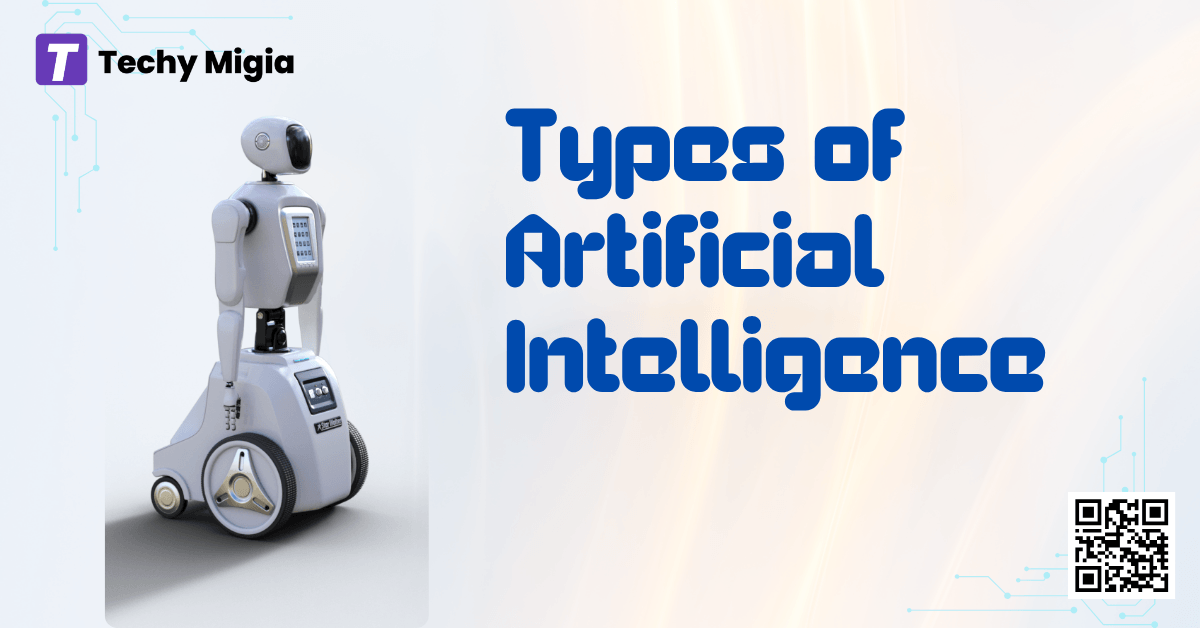
There are different levels of AI. There is a narrow and general AI. Narrow AI is a more specialized form of AI. This form of AI is more specific and is more focused on a specific function. This function can be for giving recommendations for movies to a person based on their past behavior or recognizing someone’s face. The general AI, however, has a broader aspiration to have a broader range. This range is to be able to perform any kind of intellectual task that a human being would be able to perform.
Narrow AI is already in use in the everyday life of consumers; however, general AI has not been developed and is still an idea.
How AI systems learn and make decisions
The intelligence that is found in AI technology is learned automatically through experience and through the data that is given to the specific AI product. This is done using the process of machine learning and is how the AI technology figures out how to give recommendations. The recommendations given by the AI based on the data are not just random recommendations. The recommendations are given based on the data that have been collected and analyzed. The recommendations are made from the data analysis that has been put through the process multiple times and over a period of time, which allows the process to be as efficient as possible.
Everyday Examples of Artificial Intelligence You Already Use
Smart assistants like Siri, Alexa, and Google Assistant
AI voice assistants have become digital friends. They can remind you of things, help answer questions, and even help control other smart devices. The fact that they do everything through natural speech makes them more friendly and provides that conversational touch.
Recommendation systems on Netflix, YouTube, and Spotify
Do you ever wonder why some apps are so tailor-fitted to your preferences? That’s just AI at the backend processing your information so that it can put into action whatever you’re liking, including streaming your songs and tailoring your playlists.
AI in smartphones: face recognition and voice typing
AI-integrated smartphones are like hub machines of AI. They help us with face recognition, open the devices, and also assist our speech to write text, and do that with very high precision.
Navigation apps and real-time traffic predictions
With AI-integrated navigation, we can travel anywhere without the hassle. AI-integrated navigation makes the journey safer and less stressful. AI navigation takes the step of preplanning the best route and also creates plans while traveling.
Email spam filters and smart replies
AI smart filters help us to locate spam messages, save our time, and also help by providing smart replies to control our conversations.
AI in Business and Industry
- Chatbots and virtual customer support systems: With the advent of AI in the marketplace, every one of us has to face the challenge of the advent of smart AI-integrated robots that will one day be tackling every workplace. This will enable every business entity to obtain efficiency and reliability easily.
- AI in marketing: Smart AI has a positive impact on businesses. The smart AI-integrated systems for demand have very smart and integrated systems to control the business’s demands, and it is also very positive and has positive control over the owner’s demands.
- Fraud detection systems in banking and finance: The use of smart AI in institutions to control unauthorized transactions has become a necessity.
- Inventory management and demand forecasting: Smart AI has a positive impact on businesses. The smart AI-integrated systems for demand have very smart and integrated systems to control the business’s demands, and it is also very positive and has positive control over the owner’s demands.
- Automation in manufacturing and robotics: Automation is on the rise in factories. Robots are used to build products, and AI makes improvements to the process. Profits increase.
AI in Healthcare: Transforming Modern Medicine
- AI-powered diagnostics and medical imaging: AI is better than humans at analyzing medical images. It gives an advantage to doctors and improves the chances of patients surviving.
- Virtual health assistants and symptom checkers: Digital assistants can provide health advice instantly. It evaluates health symptoms and recommends actions. Easy and helpful.
- Drug discovery and research acceleration: Finding new drugs is made faster with AI. It analyzes data and finds new drug compounds more quickly than humans.
- Robotic surgery and precision treatment: Robots in surgery improve accuracy and reduce healing times. It also improves the skills of surgeons.
- Patient data analysis and predictive healthcare: AI can analyze and predict health complications. More effort can go into preventing problems, rather than treating them.
AI in Education and Learning
- Personalized learning platforms and adaptive systems: Education can be customized. AI allows for better learning and understanding by adapting to the individual.
- AI tutors and homework assistants: Learning support can be offered by virtual teachers. They can help with understanding and learning outside of school.
- Automated grading and feedback tools: AI is able to analyze and grade assignments and provide feedback instantly. This allows for better learning.
- Language learning apps powered by AI: Interactive and immersive ways to learn are now obtainable from apps that use AI. Science, history, and other topics can be learned.
- Enhancing online education with intelligent systems: Courses are designed to provide the best ways for learning and engagement, and AI is used to adapt them.
AI in Transportation and Mobility
- Self-driving cars and autonomous vehicles: A major advancement is self-driving cars. They can control other cars and brake while making decisions on the road.
- AI in ride-hailing and route optimization: AI is used to assign passengers to drivers and improve travel times by determining the best route.
- Traffic management and smart city systems: AI is used to improve traffic in smart cities.
- Drone deliveries and logistics automation: Drones are changing how we deliver packages. Using drones can make package delivery faster and easier, especially in rough areas.
- Predictive maintenance in transportation systems: Planned out, maintenance can save the company money in the long run. AI helps by predicting the failure of equipment before it actually happens.
AI in Entertainment and Creativity
- AI-generated music, art, and videos: AI can also create music, paint pictures, and make videos. These “creative” advances are impressive, but AI lacks the expanse of human imaginative ability.
- Content recommendations on streaming platforms: AI can suggest titles and what you should watch based on your interests.
- Video game AI and realistic character behavior: Characters in video games can be powered by AI and can make the game feel more realistic and improve the overall experience.
- AI in film production and editing: AI can make good and fast editing, visual effects, props, and screenplay analysis.
- Deepfake technology and its implications: Although interesting from a technological perspective, deep fake technology and AI also raise questions about the ethics and truth behind the video.
AI in Smart Homes and Daily Living
- Smart thermostats and energy-saving systems: Smart thermostats adjust to a user’s habits and save money by reducing unnecessary heating and cooling.
- Home security with AI-powered cameras: AI has been used in intruder detection and alerts, noticeably improving the security of homes.
- Voice-controlled appliances and automation: Because you won’t have to do housework, using voice-activated appliances will make your daily routines easier.
- AI in wearable devices and health tracking: Wearing smart health monitoring devices helps improve health by providing important information.
- Personalized home experiences powered by data: Smart homes evoke a futuristic feel by using AI to automatically adjust your lights, music, and climate controls to your preferences.
Emerging and Advanced AI Applications
AI in cybersecurity and threat detection
AI makes it easier to defend your network and save important information by detecting cyber threats as they happen.
AI in agriculture: smart farming and crop monitoring
Smart farming practices are integrated with AI to create a more sustainable farming ecosystem.
AI in space exploration and scientific research
AI analyzes space data and increases our knowledge of the universe.
AI in legal tech and document analysis
AI has been integrated with document review, thereby enhancing labor efficiency within law firms.
AI in climate modeling and environmental protection
AI simplifies the process of conserving the environment by providing data analysis of climate patterns for better decision-making.
Benefits and Limitations of AI Examples
How AI improves efficiency and convenience
AI brings stronger productivity. There is greater accuracy, the speed with which things are done, and the defining features of ease.
The risks and challenges of relying on AI
AI has to be relied upon to introduce some risks. Some possible errors, biases, and failures of the system might be serious.
Ethical concerns around real-world AI applications
There are some ethical considerations. There will be bias, some will want to remain private, and accountability will not be equally distributed.
Balancing innovation with responsibility
When there is progress, there is also the need to be careful. In an advanced world, there will be responsible progress to ensure helpful AI for the people.
Conclusion: The Expanding World of Artificial Intelligence
As technology changes, the use of AI will change rapidly, and new uses of AI will rapidly change the use of technology in industries and the lives of people. AI is also an enabler of empowerment. People will be able to make decisions and prepare for changes. AI and the future are going together. There is an interdependence, and there is also the need to be responsible and to use AI with an innovative purpose.
GIPHY App Key not set. Please check settings